
Nature Watch: Beetle Mania
About the author: Steve Ellis is a naturalist and Land Trust member who enjoys sharing his love of the natural world. His blog series, “Nature Watch,” will appear each month in “Habitchat,” chronicling native plants and wildlife you can expect to see during that particular time of year. We thank Steve for sharing his passion, illustrating the importance of island conservation.
Overview
July is a good month to get out and indulge in Beetle Mania. While beetles may not have screaming fans like those that showed up for the Beatles’ band tour in America, they have more than their share of charisma.
Beetles form the largest order in the animal kingdom, with approximately 400,000 named worldwide. New species are being discovered each year. Approximately one third of all the insects in this region are beetles.
A pair of hardened forewings, folded over the more fragile hindwings, separates beetles from other insects. Called elytra, these wings also protect the abdomen. Beetle heads have compound eyes made up of small individual units. Also attached to the head are antennae that are used for smell, taste, and as organs of touch. In aquatic species they are used to circulate air for breathing.
Beetles live in nearly every habitat, in freshwater and from soil to treetop.
Ground beetles scurry along on the soil surface while sand beetles burrow into the substrate. Some beetles live out their lives under plants or woody debris. There are specialist species that inhabit fungi and mosses.
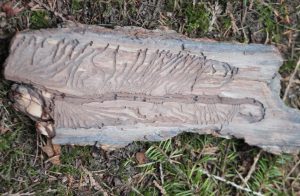
Beetle gallery by Martha Ellis.
Forests are replete with beetles. Tiny bark beetles tunnel through the bark of a tree and create galleries between the bark and first layer of wood. Their larvae excavate further tunnels that are offshoots of their parents’ excavations. Eventually the young chew their way out of the tree, their tunnels getting progressively wider as they consume the wood.
Boring beetles drill into trees in the manner of bark beetles, but they’re larger and go deeper. They often excavate trees already compromised by disease. Many are colorful, such as the golden buprestid which is iridescent green with coppery-red margins.
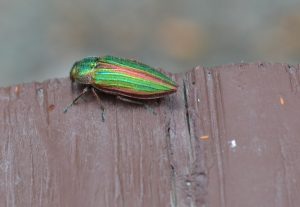
Golden buprestid beetle by Martha Ellis.
Other beetles live in wildflowers or tree blossoms. There are species that crawl about the needles of conifers and others that eat leaves of deciduous trees. One specialist species is found only in beaver lodges.
Aquatic beetles live in ponds, lakes, and the slower-moving portions of streams. Tiny whirligig beetles can be seen on the surface of ponds. Predatory diving beetles are underwater species that only come up to the surface to take in a load of air under their elytra. Scavenger water beetles may also be seen swimming about underwater.
Beetles may get a little too close to home at times. Our own wheelbarrow was wrecked by powder post beetles that chewed up the handles.
The impact of beetles can be detected everywhere. Some recycle nutrients by eating molds, fungus, rotting wood or animal dung, and by scavenging carcasses. Some are fierce predators of insects and invertebrates.
Beetles are part of the diets of many birds, amphibians, reptiles and some mammals such as shrews.
Finding beetles can be challenging despite their being nearly omnipresent. Look under fallen wood and underneath shrubs and ferns. Go out at night with a strong headlamp or flashlight to look for ground beetles. The flowers of plants such as skunk cabbage and yellow pond lilies often attract beetles. Tiger beetles can be found on beaches, particularly those that are backed by clay bluffs; these colorfully-marked species tunnel into the clay.
Try to get good close-up photos of the beetles you find. These pictures can be sent to the internet site BugGuide.Net. Their experts review the pictures and identify the species for you. If you prefer having an actual book in hand, there are also field guides that will help you participate in Beetle Mania.
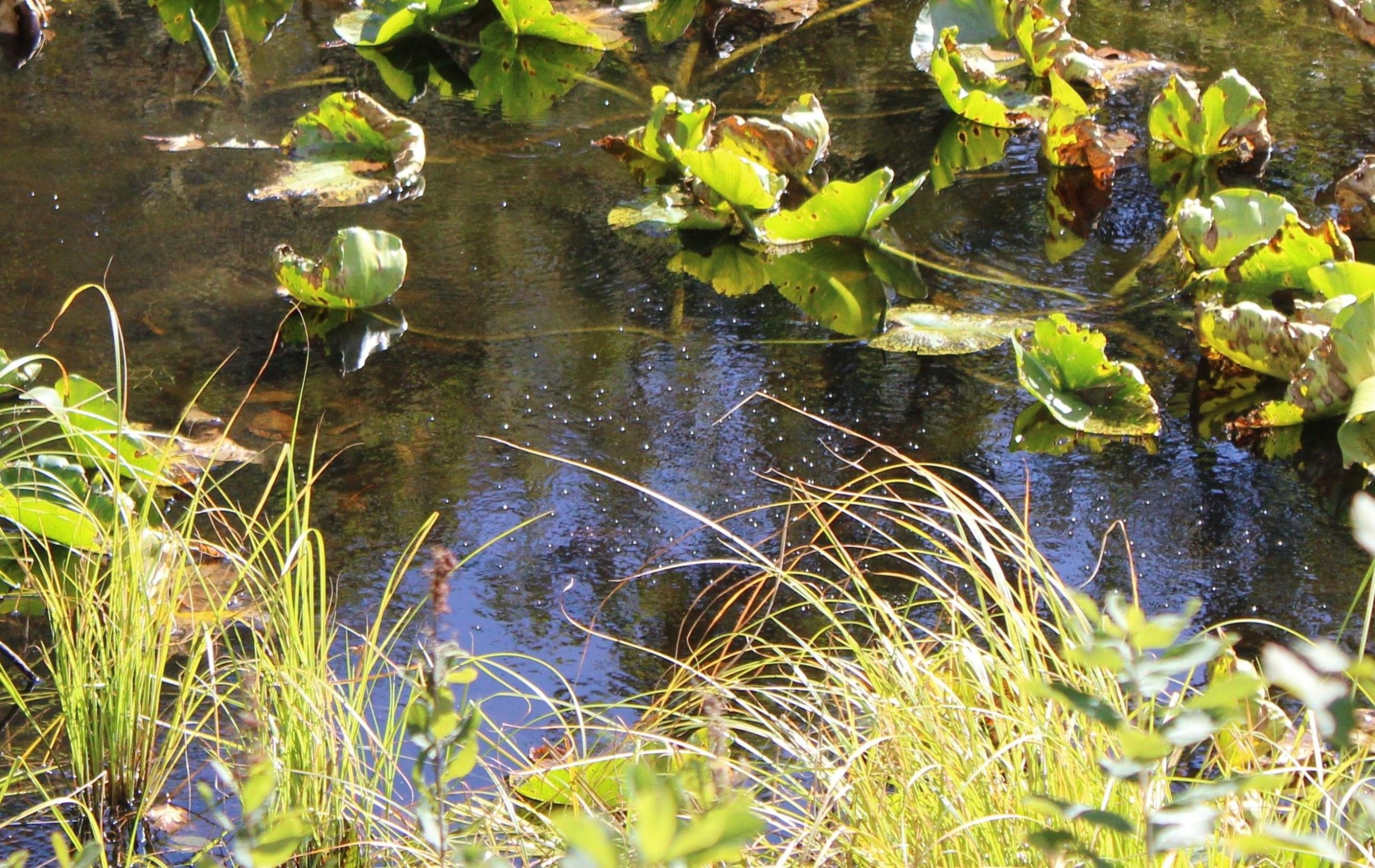
Whirligig beetles by Martha Ellis.
Fauna: Whirligig Beetles (Gyrinus species)
Whirligigs are the only beetles capable of using the surface tension of water for support.
Also known as scuttle bugs, these small beetles have an elongated oval-shaped body (ellipsoid). The front legs are short, while the large middle and hind legs are used for swimming. Flattened sides keep them from sinking. Whirligigs have two sets of eyes, one pair looking above water and another seeing beneath the surface.
These shiny black or dark green beetles whirl around on the surface, searching for dead insects and plant matter to eat. When seen from above, a school of whirligigs resemble tiny bumper cars zipping around in sheltered water.
Whirligigs are accomplished divers. They carry a bubble of air under the forewings when they dive, giving them a silvery look. This allows them to stay under for a considerable time, although most dives are for a short duration. Usually dives are only undertaken when they feel threatened.
The dance of whirligig beetles is a summertime treat not to be missed.

Cow parsnip by Martha Ellis.
Flora: Cow Parsnip (Heracleum maximum)
Our tallest wildflower is one that attracts much attention from pollinating insects.
Cow parsnip can grow to an amazing ten feet tall. The stems are greenish, hollow and hairy. Leaves of this perennial are 3-lobed and may span up to fifteen inches across. The top leaves resemble those of maple trees.
The blooming period starts in May and can last into August. A member of the carrot family, cow parsnip flowers are tiny, white, and held in umbels that are flat or slightly rounded. The topmost cluster can measure up to a foot across and secondary umbels sometimes grow from offshoots below.
Small bees, butterflies, beetles and flies all pollinate the flowers. The resulting flat, brown seeds dry out in the summer sun. Wind aids in distributing them. The seeds are also eaten by birds such as Dark-eyed Juncos, Pine Siskins, and American Goldfinches.
Deer occasionally browse cow parsnip but it doesn’t appear to be a favorite food item. On the mainland, elk and moose are more inclined to eat it than their smaller cousins. We’ve seen grizzly and black bears munching on this plant in Canada.
Cow parsnip is a host plant for anise swallowtail butterflies and several moth species. A number of other insects are attracted to it, along with their predators. These include some beetle species and birds such as Downy Woodpecker.
Moist soils are the preferred growing sites for cow parsnip. It does best in partial shade but will tolerate full sun if its roots remain moist. This plant is used to stabilize soils as it grows quickly and reseeds readily.
A cautionary note: while not as harmful as poison hemlock which resembles it, some people’s skin reacts negatively to contact with cow parsnip.
Many roadsides, forest clearings and other open areas on these islands support cow parsnip, the giant among the wildflowers.

Latest News

Newsletters

Strategic Plan 2024-2028

2027 Calendars Now Available!

Turn Lane Construction at Keystone Preserve

Public Input Meeting: Lagoon Point Community Forest