Nature Watch: Comings and Goings, Fall Edition
About the author: Steve Ellis is a naturalist and Land Trust member who enjoys sharing his love of the natural world. His blog series, “Nature Watch,” will appear each month in “Habitchat,” chronicling native plants and wildlife you can expect to see during that particular time of year. We thank Steve for sharing his passion, illustrating the importance of island conservation.
Overview
If nature had traffic controllers, they’d be overworked in September.
Birds Coming: Large numbers of Dunlins, a plump sandpiper species, come to local mudflats. They are shadowed by Merlins, a mid-sized falcon, and the larger Peregrines. Other shorebird arrivals include Black Turnstones and Surfbirds that prefer rocky beaches.
A few loons and grebes begin to appear this month. They are joined on the saltwater by duck species such as Surf Scoters and Red-breasted Mergansers. Other ducks including Northern Shovelers and American Wigeons choose our lakes and fields, respectively.
The North Cascades begin shedding birds in September in anticipation of the coming winter. Fox Sparrows, Hermit Thrushes and Ruby-crowned Kinglets move downslope. The latter, along with their more numerous cousins Golden-crowned Kinglets, join mixed flocks that include year-round resident Chestnut-backed Chickadees and Red-breasted Nuthatches.
Songbirds also come from points north. Golden-crowned Sparrows will winter here, while Snow Buntings and Lapland Longspurs tarry awhile before continuing southward.
Brandt’s Cormorants enter the Salish Sea after breeding on the outer coast. They join Common Murres that made the same movements in July and August.
Birds Going: A host of birds leaves our islands in August, September and October. Warblers, flycatchers, swallows, Western Tanagers, Swainson’s Thrushes and Black-headed Grosbeaks aim for Mexico and Central America. Blue-winged and Cinnamon Teal are two duck species choosing to leave as others arrive from the north. About 30 species in all fit in this category.
While Brandt’s Cormorants travel from the outer coast to more sheltered inlets, Tufted Puffins head out to venture on the open sea. Some Pigeon Guillemots leave local waters for fishing grounds off southeast Alaska and British Columbia. Also flying north are local Bald Eagles that time a visit to the Fraser River in British Columbia for its salmon runs. They’ll return in October
Mammals Coming: California sea lions journey northward from their breeding colonies in Mexico and California. It’s mostly the males that make the long trip. Females and their young don’t often swim this far north.
Townsend’s big-eared bats sometimes come to our islands to find hibernacula (plural of hibernaculum, a spot for hibernation). Other bats may do this as well.
Mammals Going: Small numbers of gray whales begin their southerly jaunt to their wintering areas in the lagoons of Baja California. They fast during the trek and throughout the winter, making them vulnerable to starvation. Minke whales and humpback whales stay in the Salish Sea through October.
Hoary bats migrate southward in September as does a small portion of the silver-haired bat population. Little brown myotis fly upslope onto the mountains to find hibernacula on the talus slopes and in caves. Other small myotis may do so as well.
Fish Coming: Schools of coho salmon cruise by our islands in September, headed for the mainland rivers to spawn. Smaller numbers of late-run chinook salmon also spawn this month. These are joined by cutthroat trout, a smaller salmonoid species, which enter the rivers to gulp down loose salmon roe.
Fish Going: Cooler surface waters spur many fish species to swim into the depths of the Salish Sea. These include perch and cod species.
Insects Coming & Going: This list is short. California tortoiseshells, a colorful butterfly species, migrate out of the mountains into the lowlands in order to hibernate. At the same time, a few dragonflies fly to California and the Southwest where they can live through the winter.
All these movements to and fro are critical for the survival of these particular species. You can get a sense of the magnitude of the movement of creatures this month through observing the various habitats our islands have to offer and by visiting the BirdCast website. BirdCast uses radar to highlight how many birds are passing over during the periods of late evening and night. For those with good hearing, I also recommend finding a quiet place outdoors to listen to flight calls after dark. It will enhance your understanding of the comings and goings of our wildlife.
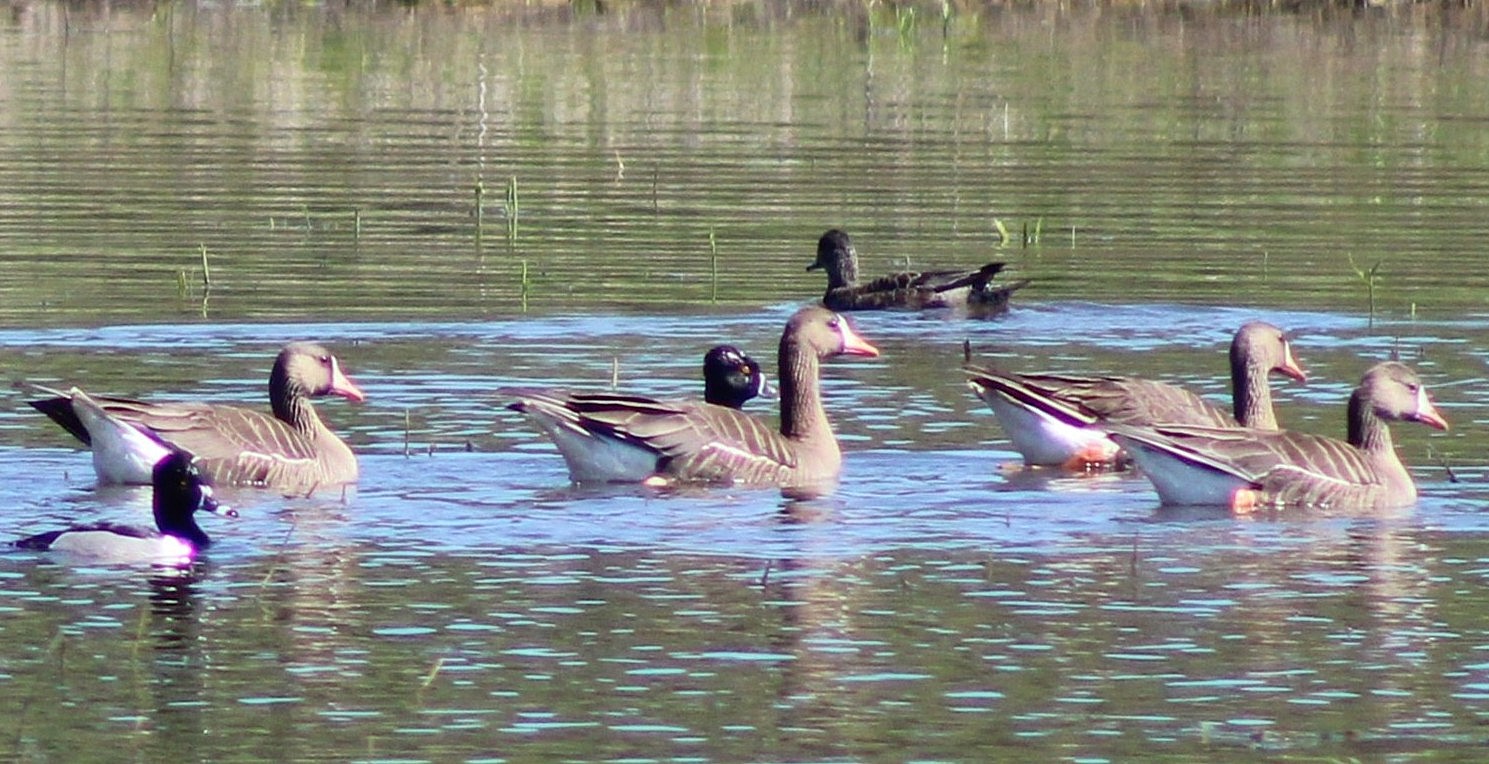
Greater White-fronted Geese by Martha Ellis.
Fauna: Greater White-fronted Goose (Anser albifrons)
Camano and Whidbey receive a large influx of geese in the fall. Canada, Snow and Brant Geese tend to stay throughout the cold months. Cackling Canada and Greater White-Fronted Geese just use our area as a rest stop on their journeys southward.
Greater White-fronted Geese are named for the white arc on their faces that shows over the upper mandibles. They are overall brownish with pink bills and have bright orange legs and feet. Variable blackish barring across the whitish lower breast give them the alternate name of specklebellies often used by hunters.
This interesting species nests across a large portion of Alaska and far northern Canada. Mated pairs stay together year-round, including during migration. They often do their migratory flights at night. We sometimes are able to hear their laugh-like calls at dusk or later as they fly over our house in Coupeville, bound for Crockett Lake.
During their 1- to 2-week layover, they replenish themselves by eating tubers, seeds and grains. Emergent aquatic vegetation and duckweed are also part of their diet. Immersing their heads allows them to access roots of aquatic plants.
Greater White-fronted Geese are site-loyal to their particular breeding grounds, layover areas, and wintering grounds, so the chances are good that you can see the same birds year after year. Some individuals can live up to 25 years.
Most members of this species winter over in wildlife refuges of southern Oregon and California. Occasionally one or two will join a flock of Canada Geese and remain with them until spring. The young of the year stay close to their parents into their third year of life. Some siblings remain attached to each other for life.
The main predators are wolves, coyotes, foxes, and eagles. On the breeding grounds, gulls and ravens raid nests, often in conjunction with prowling foxes. The young from the previous year are staunch defenders of the eggs and subsequent hatchlings.
Greater White-fronted Geese return to our area for a week in late April through early May. Watch for them in the fields of central Whidbey and on Crockett Lake. While not often visiting Camano Island, they’re sometimes seen around the farms on the nearby mainland.
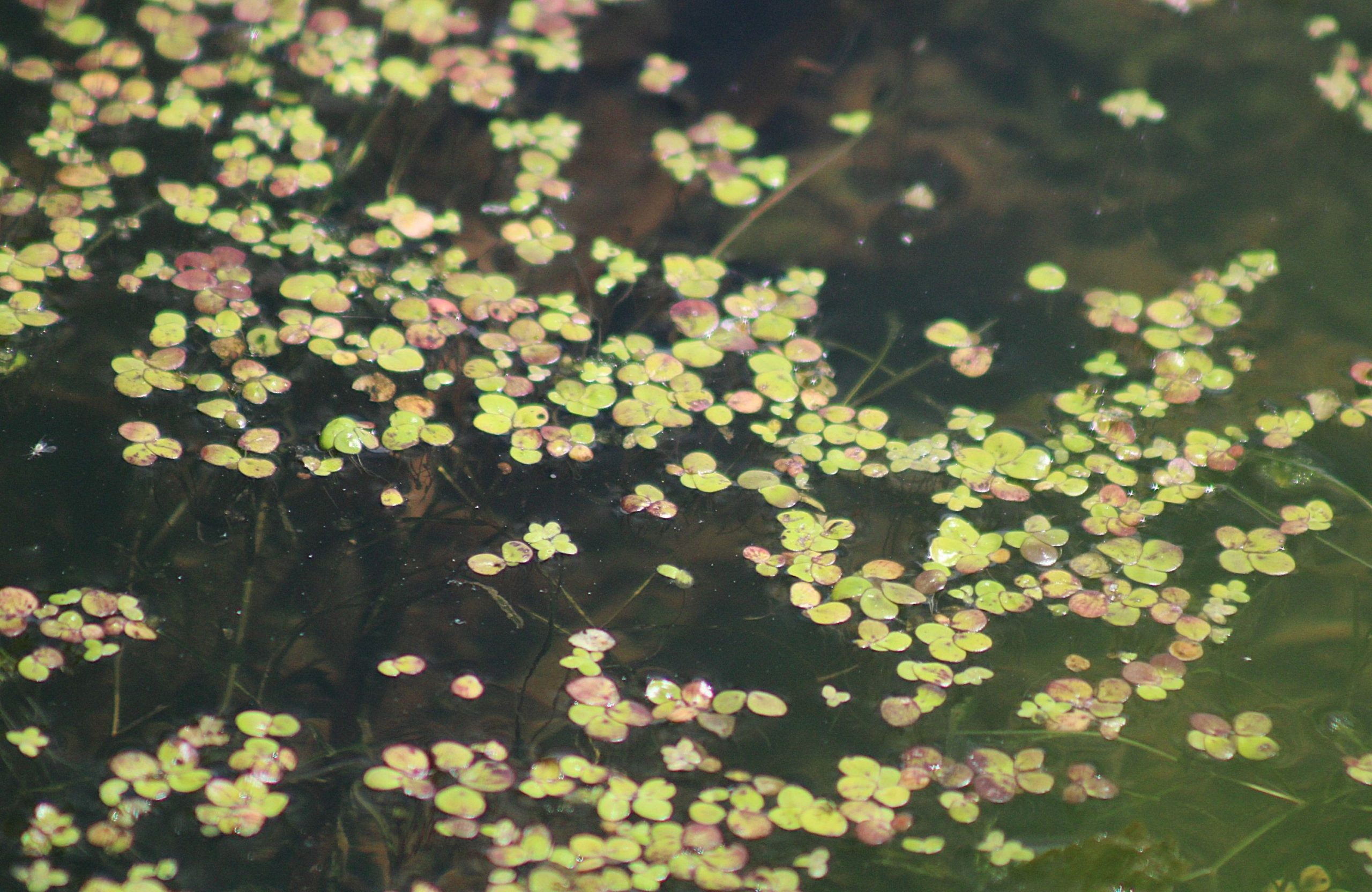
Duckweed by Martha Ellis.
Flora: Duckweed (Lemna species)
Seeds can disperse in a variety of ways, but plants themselves don’t migrate… or do they? At least one genus of a local species does engage in a migration of sorts.
Duckweeds are our smallest flowering plant, with Lemna minor (common duckweed) being the tiniest. The leaflike body is green and has an underwater rootlet. Though a tiny flower is sometimes present, the plant usually reproduces by the breaking off of buds, which go on to produce colonies of cloned plants. It also spreads by sticking to the feathers and legs of waterfowl, which then transport it to other wetlands.
The growth rate of colonies can be phenomenal under optimum conditions. A doubling of biomass in two to three days is common. The colonies are so successful they can cover the surface of a pond, blocking sunlight from algae. This is an advantage, since water in ponds with less algae has more oxygen, which supports greater biodiversity.
Duckweed provides cover for invertebrates, small fish, and the aquatic phase of amphibians. It’s eaten by several duck species and geese. Muskrats also dine on duckweed, using their front paws to sweep it into their mouths. It’s no wonder duckweed is a popular food item, as it is over 40% protein.
As the weather cools in fall, a change happens to the little plants. Small starch-filled organs called turions break away and sink to the bottom. The warmer weather of the following spring jumpstarts growth, causing new plants to rise to the surface. In essence, duckweed has a vertical migration.
Look for duckweeds on the surface of ponds, marshes, ditches and other areas of standing water. They are truly a remarkable and important plant species.

Latest News

Newsletters

Strategic Plan 2024-2028
2027 Calendars Now Available!

Turn Lane Construction at Keystone Preserve

Public Input Meeting: Lagoon Point Community Forest